What Are GHK Peptides?
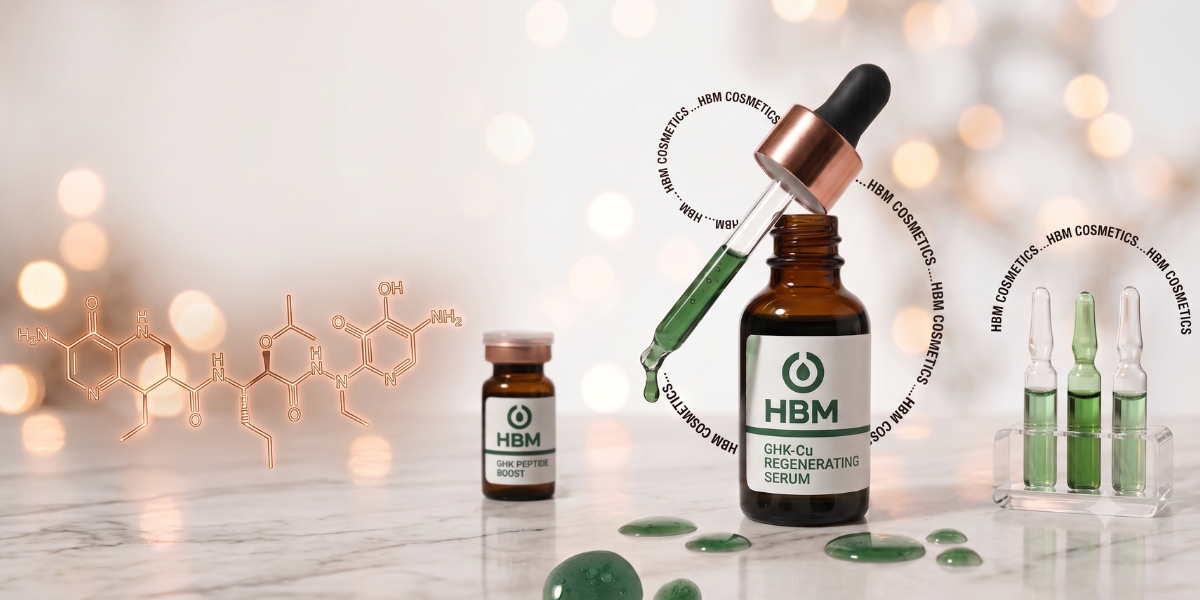
GHK peptides are short chains of amino acids naturally found within the human body. The most studied form, GHK-Cu, consists of the tripeptide glycyl-L-histidyl-L-lysine bound to a copper ion. This copper-binding capability is central to its biological activity and contributes to its role in skin repair, collagen production, and cellular communication.
Natural levels of GHK-Cu decline with age. Consequently, researchers and formulators have increased their focus on topical cosmetic applications.
How GHK Peptides Support Skin Health
Unlike ingredients that primarily hydrate or exfoliate, GHK peptides function as signaling molecules that influence cellular activity within the skin. Research suggests that GHK-Cu can help:
- Stimulate collagen production
- Support elastin synthesis
- Promote wound healing and tissue repair
- Improve skin firmness and elasticity
- Reduce the appearance of fine lines and wrinkles
- Support antioxidant defense mechanisms
- Enhance overall skin regeneration processes
These benefits are largely attributed to the peptide’s ability to activate fibroblasts and support extracellular matrix remodeling.
The Anti-Aging Potential of GHK Peptides
Furthermore, one of the primary reasons cosmetic brands are exploring GHK peptides is their anti-aging potential.
Clinical investigations show that copper peptide formulations can improve skin density, thickness, firmness, and wrinkle appearance. Researchers believe these effects stem from increased collagen synthesis and improved structural support within aging skin.
Unlike some active ingredients that may cause irritation, copper peptides are generally considered well tolerated by many skin types, making them attractive candidates for long-term anti-aging regimens.
Why Cosmetic Manufacturers Are Interested in GHK Peptides
The skincare industry continues to move toward evidence-based ingredients that provide measurable benefits. GHK peptides align with several major market trends:
Demand for Science-Backed Ingredients
Consumers increasingly seek products supported by research rather than marketing claims. GHK-Cu has accumulated decades of scientific investigation, making it one of the most extensively studied cosmetic peptides available.
Premium Positioning Opportunities
Additionally, consumers and industry professionals often associate copper peptide formulations with advanced skincare.
Multi-Functional Benefits
GHK peptides offer multiple cosmetic benefits from skin rejuvenation and firmness support to repair-focused skincare, enabling brands to address several consumer concerns with a single active ingredient.
Innovation in Peptide-Based Skincare
Peptides remain one of the fastest-growing categories in cosmetic product development. GHK peptides allow brands to participate in this innovation trend while leveraging a highly recognized active ingredient.
Formulation Considerations for GHK Peptides
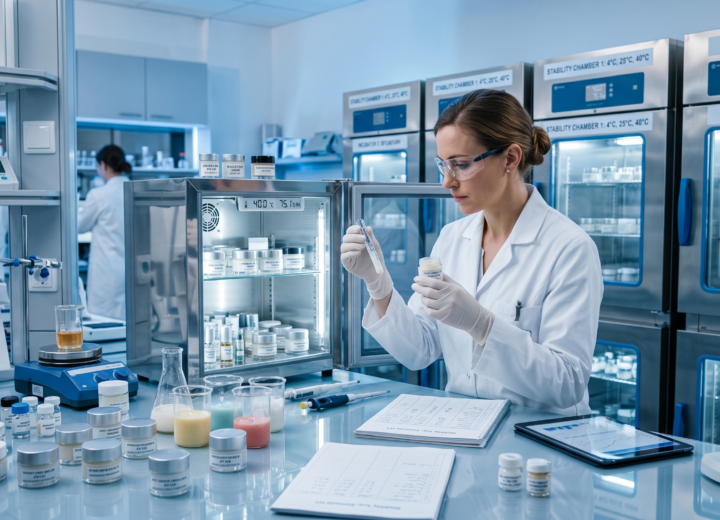
While GHK peptides present exciting opportunities, successful formulation requires careful attention to stability and delivery.
Specifically, cosmetic developers should consider:
- Ingredient compatibility
- Copper peptide stability
- Appropriate pH ranges
- Packaging requirements
- Concentration optimization
- Delivery system selection
Because peptides are biologically active molecules, formulation expertise plays a critical role in ensuring product performance and shelf stability.
The Future of GHK Peptides in Cosmetics
Looking ahead, industry experts expect GHK peptides to remain at the forefront of skincare innovation as peptide technology continues to evolve. Growing consumer awareness of collagen support, skin longevity and regenerative beauty concepts is likely to drive continued demand for copper peptide-based formulations.
For cosmetic brands seeking ingredients that combine scientific credibility with strong consumer appeal, GHK peptides represent a valuable opportunity to develop next-generation anti-aging and skin-repair products. With ongoing research and increasing market adoption, copper peptides are positioned to remain a key component of premium skincare portfolios for years to come.
Partner with HBM for Advanced Peptide Formulations
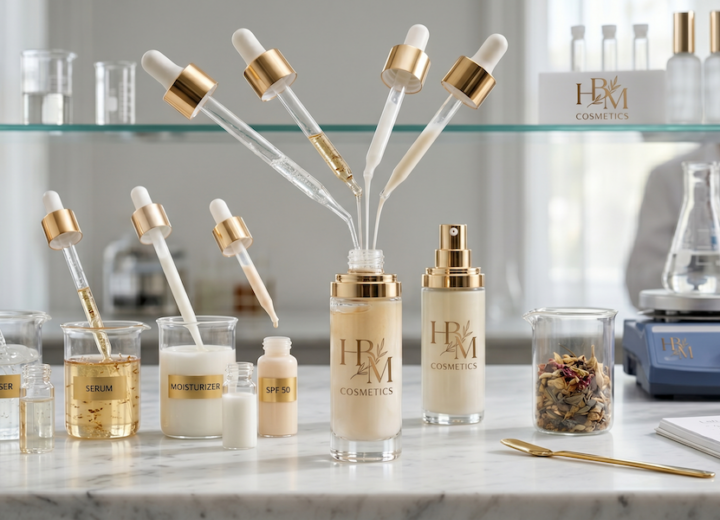
As demand for clinically inspired skincare continues to grow, brands need manufacturing partners capable of transforming innovative ingredients into market-ready products. HBM supports cosmetic brands through formulation development, custom manufacturing, packaging, and scalable production solutions designed to meet evolving consumer expectations.
Looking to launch a peptide-powered skincare line? Contact HBM to explore custom cosmetic manufacturing solutions tailored to your brand.
FAQ
What are GHK peptides?
GHK peptides are naturally occurring amino acid chains involved in tissue repair and skin regeneration. The most common cosmetic form is GHK-Cu, also known as Copper Tripeptide-1.
What are the skincare benefits of GHK peptides?
GHK peptides may support collagen production, improve skin firmness, reduce visible signs of aging and promote skin repair processes.
Are GHK peptides suitable for anti-aging skincare?
Yes. GHK peptides are widely used in anti-aging formulations because of their ability to support collagen synthesis and skin regeneration.
What is Copper Tripeptide-1?
Copper Tripeptide-1 is the cosmetic INCI name for GHK-Cu, a copper-binding peptide commonly used in skincare products.